
Can AI replace M&A analysts? What generative AI still gets wrong in deal work
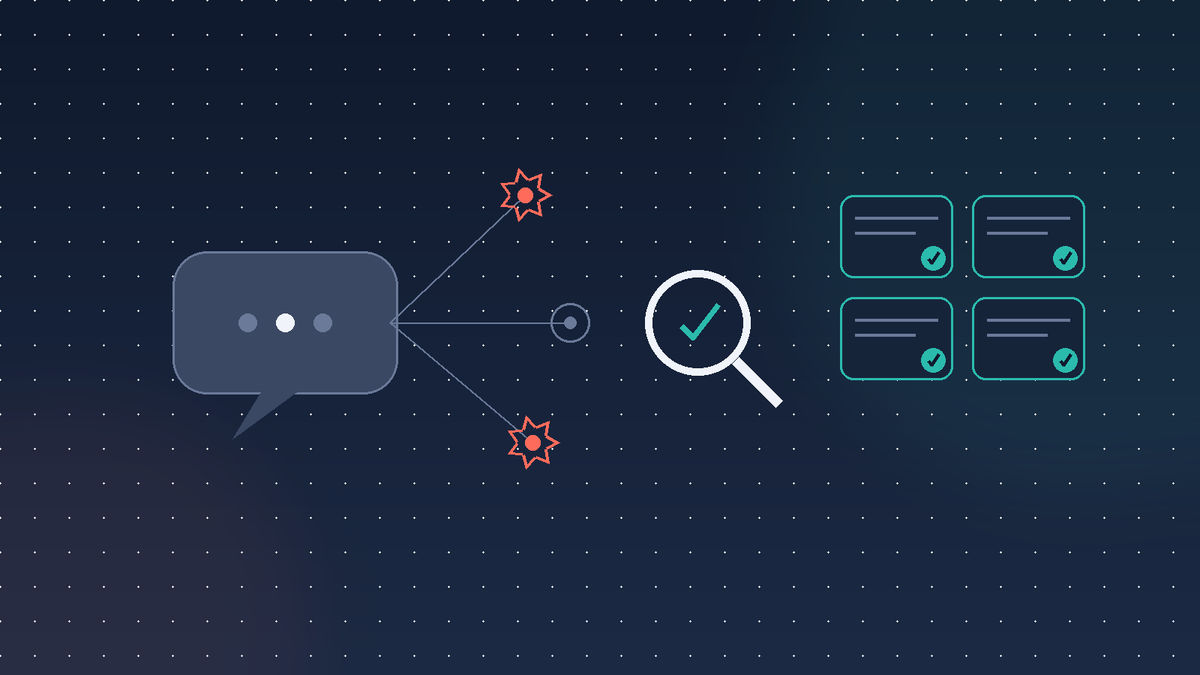
Every deal team has had the same conversation by now: someone pastes a target's financials into ChatGPT and asks for a quick read. It is fast, it is fluent, and it sounds confident. It is also sometimes wrong in ways that are hard to catch until they cost real money.
That gap between how capable generative AI sounds and how reliable it actually is for deal work is the question this article answers. Not “will AI change M&A” (it already has), but “can it replace the analyst,” and what the evidence from 2025 and 2026 actually shows.
In this article you'll learn:
- Why dealmakers are adopting generative AI faster than almost any other tool category in M&A history
- What McKinsey's 2025 survey data actually shows about AI's impact on deal cycles and accuracy, and what it doesn't show
- The documented failure modes of general-purpose AI tools in financial and deal contexts, including real incidents with financial consequences
- Why hallucination is a structural problem for generic AI, not a bug that gets patched away
- Where human judgment remains the deciding factor, and how that is likely to change by 2030
- What to actually check before you trust an AI-generated number in a deal
AI has already changed deal work, but “changed” is not “replaced”
Generative AI is no longer a novelty in M&A. Deal teams use it to screen targets, draft first-pass memos, summarize data room documents, and accelerate parts of due diligence that used to take analysts days. In a 2025 McKinsey survey of 200 M&A professionals using generative AI, 40% of respondents said it shortened their deal cycles by 30 to 50%. Across the deal lifecycle, respondents named more or better deal insights (57%, rising to 66% in the dealmaking phase specifically) and simplified, streamlined processes (56%, rising to 63% in target identification) as the top benefits.
That is a real, measurable productivity gain. It is also not the same claim as “AI can do an analyst's job.” The McKinsey data describes acceleration and augmentation: tasks happen faster and with more support, not tasks disappearing because a model performs them unsupervised.
A separate global study by Datasite and FT Longitude, surveying 1,000 dealmakers for “The New Deal Team,” points in the same direction. Dealmakers expect AI to be fully integrated into deal workflows by 2030, and they expect human judgment and skill to become the differentiator precisely because AI is absorbing the routine, repeatable parts of the job. That is a picture of role change, not role elimination.
Where generic AI tools genuinely help
Three use cases hold up well for general-purpose tools like ChatGPT or Copilot when used with reasonable oversight:
- First drafts of internal memos, teasers, or summary documents, which an analyst then edits and verifies
- Summarizing long documents (NDAs, management presentations, long-form reports) to orient a reader before they go deeper
- Brainstorming questions for management meetings or diligence request lists
None of these require the model to be right about a specific, verifiable fact. That distinction matters for everything that follows.
Where generic AI tools break down, and why
The core limitation is not a lack of polish, it is a lack of grounding. A general-purpose language model generates the statistically likely next word based on patterns in its training data. It has no built-in mechanism to check a specific company's actual revenue, confirm a specific regulatory filing, or verify that a quoted multiple is current. When it does not know an answer, it does not reliably say so. It produces a plausible-sounding one instead.
Thompson Hine, a law firm advising on M&A transactions, published an April 2026 analysis of exactly this risk, noting that generative tools “can be wrong, and often persuasively so.” That persuasiveness is what makes hallucination dangerous in deal work specifically: a wrong number that sounds uncertain gets double-checked, and a wrong number that sounds authoritative gets forwarded.
This is not a hypothetical risk. It has already produced real financial and legal consequences outside M&A that illustrate the exact failure mode deal teams need to guard against:
Documented generative AI failures
| Incident | What happened | Consequence |
|---|---|---|
| Air Canada chatbot (2024) | A customer-facing chatbot invented a bereavement fare policy that did not exist | A tribunal held the airline liable for honoring the fabricated policy |
| Deloitte government report (2024) | A consulting report delivered to the Australian government contained AI-fabricated citations | Deloitte refunded part of the AUD 290,000 engagement fee |
| Mata v. Avianca (2023) | Lawyers filed a brief citing court cases a chatbot had invented | The court sanctioned the attorneys involved |
| Alphabet AI demo (2023) | A public AI demo made a factual error in front of investors | Alphabet's shares dropped by roughly USD 100 billion |
None of these involved an M&A transaction directly, but the mechanism is identical to what can happen inside a deal: a model states something false with full confidence, nobody independently verifies it in time, and the error reaches a document, a disclosure, or a decision. In an M&A context, that error could land in a valuation model, a diligence memo, or a representation in a purchase agreement, where the downstream cost is a restatement, a clawback, or a goodwill impairment after closing.
Why this is a structural problem, not a temporary one
It is tempting to assume this gets solved as models improve. Some of it will. But the core issue for deal work is not raw model intelligence, it is data access and verification. A general-purpose chatbot has no connection to structured, current, private-company data. It cannot confirm that a target's reported headcount matches a verified source, cross-check a market size claim against structured industry data, or flag when a figure it generated has no underlying source at all. Thompson Hine's recommendation reflects this: treat generative AI output with the same skepticism you would apply to a junior associate's first draft, put a usage policy in place, and keep specialist human review in the loop for anything that affects diligence conclusions or deal documents.
That recommendation is really a description of what purpose-built tools are for. A platform built specifically for deal work, grounded in structured company and market data rather than general internet text, can verify a target's profile against actual coverage data, generate on-demand market sizing from structured sources instead of a plausible guess, and produce outside-in business analysis that is traceable back to a source rather than synthesized from pattern-matching. That is a different category of tool from a general-purpose chatbot, and it closes exactly the verification gap the incidents above illustrate.
So, can AI replace the analyst?
Not on the evidence available in 2026. What the data supports is narrower and, for deal teams, more useful: generative AI reliably accelerates specific tasks (drafting, summarizing, first-pass screening) and reliably fails at tasks that require verified, current, specific facts unless it is grounded in a structured, trustworthy data source. The analyst's job is shifting away from manually assembling information and toward verifying, judging, and deciding based on it. Datasite's 2030 horizon for full AI integration is a reasonable estimate for how far that shift has to run, but “fully integrated” in that framing still means human judgment as the differentiator, not human absence.
For deal teams evaluating where to use generative AI today, the practical rule is simple: use general-purpose tools for drafting and summarizing, and use data-grounded, purpose-built tools for anything where a wrong number has a cost.
Frequently asked questions
Will AI replace M&A analysts?+
Not based on current evidence. Generative AI accelerates specific tasks like drafting and summarizing, but it lacks reliable access to verified, current company and market data, which is why human review remains necessary for diligence conclusions and deal documents.
Why does ChatGPT give wrong answers about company financials?+
General-purpose language models generate statistically likely text based on patterns in their training data. They have no built-in connection to structured, verified company data, so when they do not know a specific fact, they often generate a plausible-sounding but incorrect one instead of flagging the gap.
What is AI hallucination in the context of M&A due diligence?+
Hallucination is when a generative AI tool states false information with the same confidence as true information. In due diligence, this is risky because a hallucinated figure or citation can look identical to a verified one, making it easy to miss unless it is independently checked against a source.
What is the real productivity gain from AI in M&A so far?+
According to a 2025 McKinsey survey of 200 M&A professionals, 40% of respondents using generative AI reported shortening deal cycles by 30 to 50%. The top-cited benefits were improved deal insights and simplified, streamlined processes, particularly in target identification and dealmaking.
How should deal teams use generative AI safely?+
Use general-purpose tools for drafting, summarizing, and brainstorming where being approximately right is acceptable. For anything requiring a specific, verifiable fact, such as a target's financial profile or market size, use data-grounded, purpose-built tools and apply the same scrutiny you would apply to a junior analyst's first draft.
See how StrategyBridgeAI grounds company and market analysis in verified, structured data instead of AI guesswork. Book a demo.
More from this category
Explore related insights from StrategyBridgeAI.

What is agentic AI in M&A? What deal teams actually get from it
Agentic AI is one of the most talked-about trends in M&A for 2026. Here is what the term actually means for deal teams, and what it changes in sourcing, screening and diligence today.
M&A as a System: our industry report on the world's most active acquirers is live
Our free industry report M&A as a System is live. Based on 1.6M+ acquisitions, it shows how few buyers shape the M&A market and what systematic acquirers do differently.
StrategyBridgeAI vs. Grata: platform comparison for M&A
Grata fills the pipeline. StrategyBridgeAI searches more companies, delivers more mid-market depth and carries through to a defensible valuation. The comparison.