
Deniz Schütz on the Campus to Capital podcast: AI in M&A and private markets
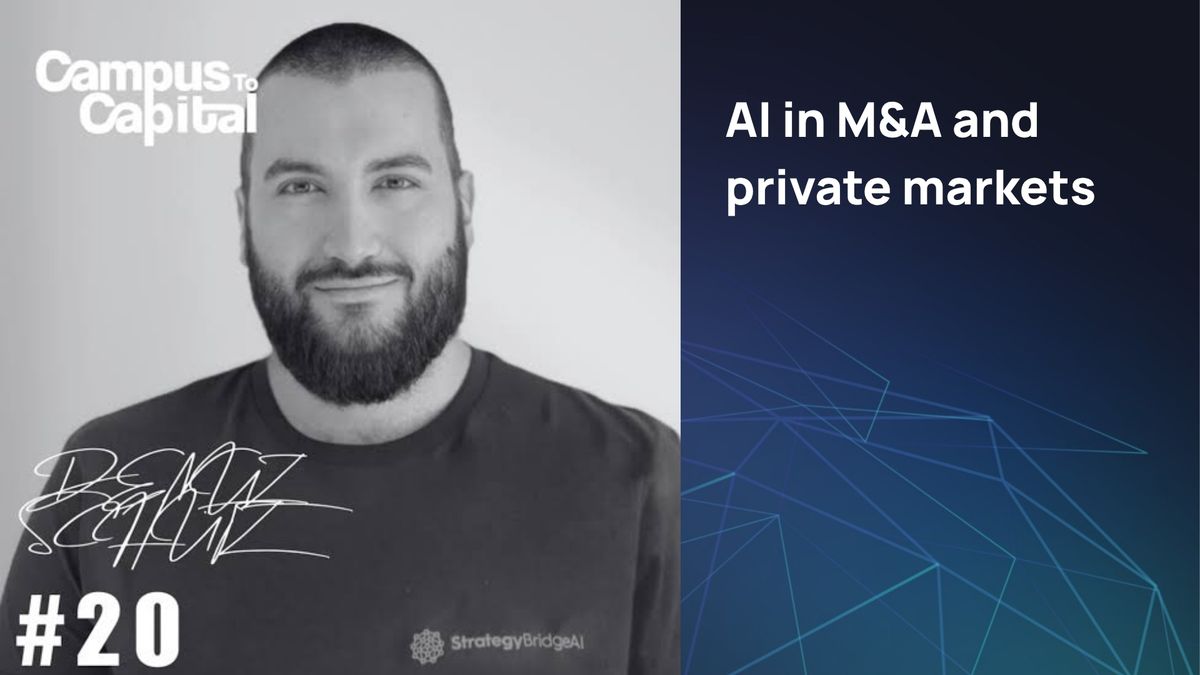
Our co-founder and CEO Deniz Schütz joined the Campus to Capital podcast for a deep dive into how data-driven analysis is changing investment decisions in M&A and private markets.
Before founding StrategyBridgeAI, Deniz worked at UniCredit and Amundi. He saw first-hand how slow, manual, and inconsistent financial analysis can get at scale. That experience is a big part of what StrategyBridgeAI was built to address.
What the conversation covers
The episode covers a lot of ground. A few of the topics worth highlighting:
From large institutions to founding a fintech. Deniz talks about his path from UniCredit and Amundi to building StrategyBridgeAI, and what working inside those institutions taught him about where the real analytical bottlenecks are.
How StrategyBridgeAI processes financial data. The platform turns millions of data points into objective analytical reports: peer group benchmarking, management forecast validation, buy-side support across M&A and private credit. The aim is to make analysis faster and less dependent on individual judgment calls.
Finding undervalued opportunities in mid-market M&A. One of the more interesting use cases discussed: how systematic data analysis helps identify companies that traditional screening methods would miss.
The rebound in M&A and the rise of private credit. Deniz shares his view on where deal activity is heading and why private credit has become one of the more important growth areas for the advisory community.
The EU AI Act and what it means in practice. For financial AI tools used in deal screening or credit assessment, the regulatory landscape is getting more specific. The episode covers what that actually means for how tools like StrategyBridgeAI are built and used.
Team and scaling. Deniz also talks about building the team in Munich, closing an oversubscribed seven-figure pre-seed round, and what he looks for when hiring for a company at this stage.
One thing that stood out
A theme that runs through the whole conversation: AI does not replace the analyst, it changes what the analyst spends time on. Less time on data gathering and formatting, more time on interpretation and judgment. That shift has real implications for how advisory teams are structured and what skills matter going forward.
Worth a listen for anyone working in M&A, private equity, or financial advisory who wants a grounded take on where AI fits in.
More from this category
Explore related insights from StrategyBridgeAI.

Why most companies stop after one acquisition, and how to build a repeatable M&A process
62% of acquirers never buy again after their first deal. What holds companies back, and the five building blocks that turn M&A from a one-off project into a repeatable process.

Why financial investors acquire twice as often as operating companies
Financial investors are 19% of acquirers but account for 36% of recorded acquisitions. The gap is less about capital than structure. What corporate M&A teams can adopt.

Serial acquirers: why 10% of buyers make 56% of all acquisitions
The most active 10% of acquirers account for 56% of all recorded acquisitions. What separates serial acquirers from one-off buyers, and what it means for your next deal.